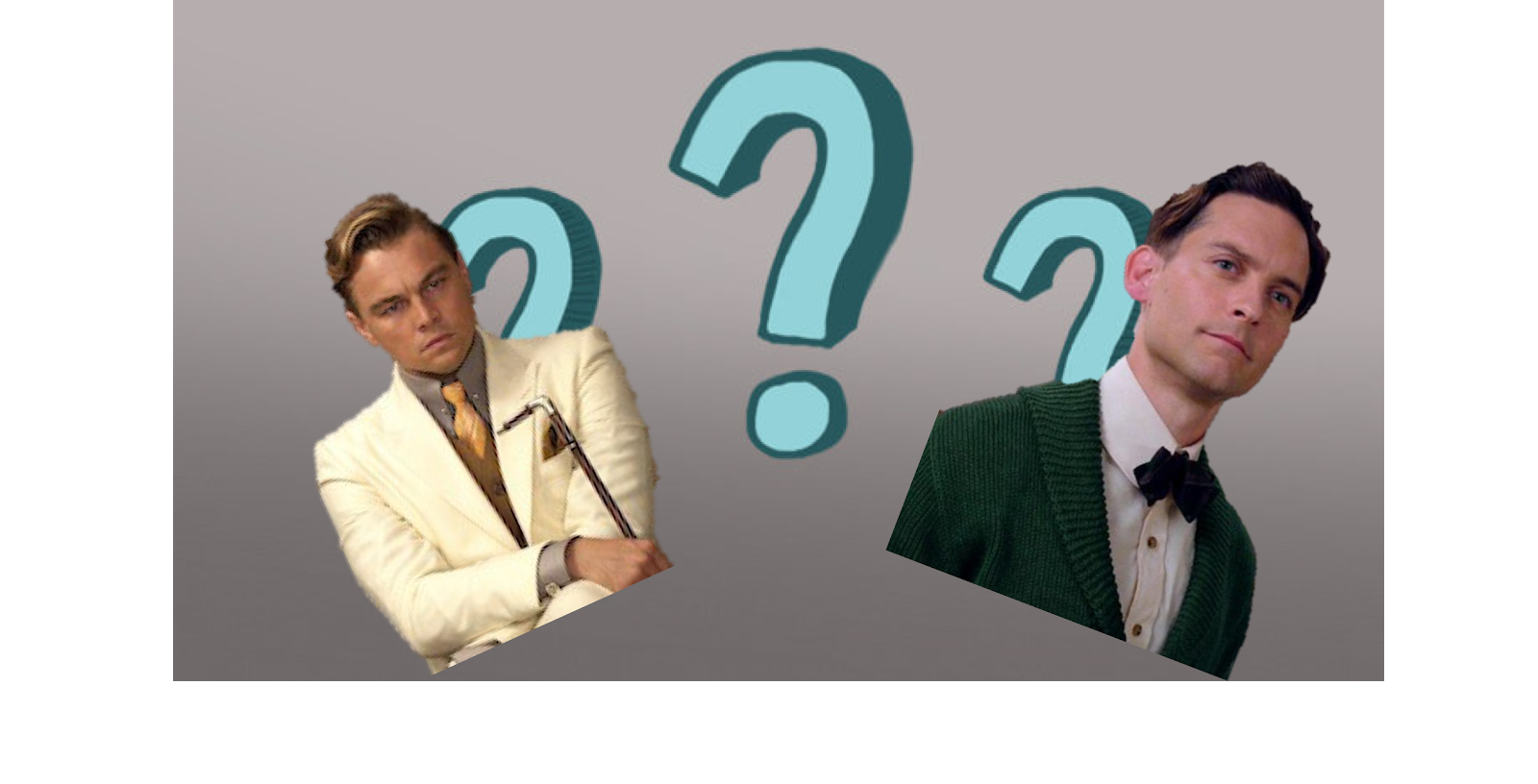
Nick is gay. At least, I think he's gay. Well, I'm not too sure. But, Jordan must be lesbian, right? Well, nobody can be sure about that one either. The thing is, Fitzgerald writes The Great Gatsby in a manner where we at first think the characters, for the most part, are heterosexual, but when you dive deeper into the text with attention to specific words and details, the reader thinks that the characters may be homosexual or bisexual. This means that The Great Gatsby is a "sexually ambiguous novel". Nick's interactions with women make the reader believe that he is straight but when he describes Jordan he uses very masculine terms. He describes her as a cadet, or a young boy, with her short hair. Another reason to believe that Nick is gay and Jordan may be lesbian is Jordan's gender ambiguous name. Also, Nick's encounter with McKee makes us suspicious of his sexuality, but it isn't clear that Nick is gay because he blames his actions on his drunkenness. Nick says "That's how drunk I was" basically denying his actions and saying that it means nothing. But does it? Nick being drunk, does that bring out his true emotions that he has been hiding? Does he know he is gay subconsciously and just denies this, but when he is drunk he acts upon it? Or is it really that he was just drunk and did a stupid thing that means nothing? This is seen a lot in the real world. There are people who seem like they may be gay, but they deny it so there's nothing else to really argue. If the person whose sexuality is in question denies that they are anything but straight, then that's what they say they are and that's how they choose to be seen. Society shouldn't question them any further.
This week in class we read a piece called Show and Tell by Scott McCloud. This piece showed (and told) the importance of pictures in readings. It started off with a short anecdote of this kid in front of his class explaining how his robot toy transforms into an airplane. He uses a mixture of words and plain showing how it does what it does. This develops the author's main argument that "words and pictures have great powers to tell stories when creators fully exploit them both," (McCloud 809). I believe that images in books don't make a work of literature any less intellectual. If the content is meant to be intellectual, pictures aren't going to make it any less. Actually, images bring a different dynamic and can allow for more intellectual content. If an author were to include a statement where there could be many interpretations, that would be considered intellectual, but if you add an image to that and turn it into a comic, there could be an infinite amount of i...
I agree with you that there is a lot of ambiguity in the novel, and this definitely relates in the real world. It's weird how we spend so much time analyzing characters in the novel to determine their sexuality, but in the real world, when similar people exist, we are quick to judge.
ReplyDelete